


UAE Small Business Relief Extended to 2029: Abu Dhabi Guide
Published 9 October 2026 | Last verified 9 October 2026 | Reading time: 9 min · By the Business Setup team, Mussaffah M4, Abu Dhabi
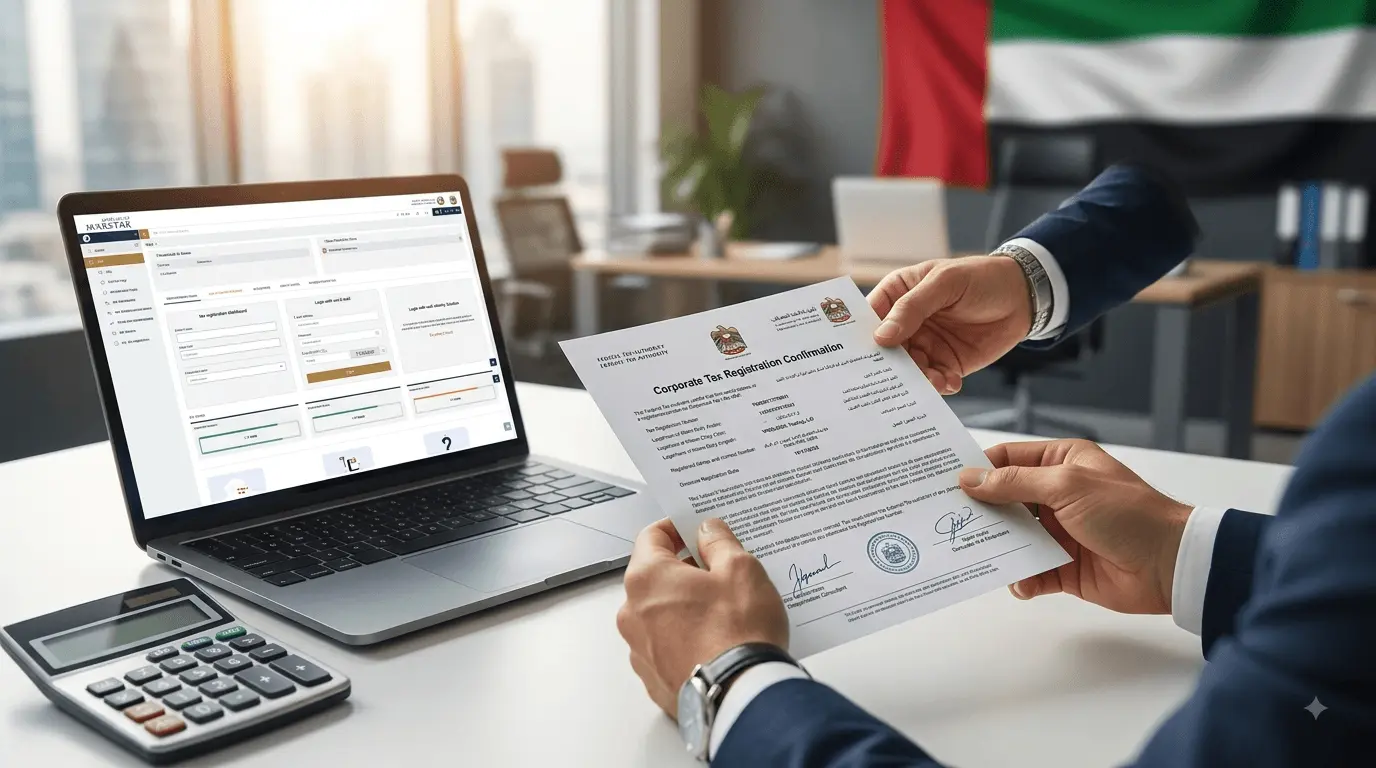
Quick answer: UAE Small Business Relief now covers tax periods ending on or before 31 December 2029, under Ministerial Decision No. 131 of 2026. The revenue threshold stays at AED 3 million, the relief is an election you make when filing your Corporate Tax return, and Qualifying Free Zone Persons and multinational group members are excluded regardless of revenue.
Small Business Relief is the quietest large change in UAE corporate tax for small companies. Most founders hear about the 9% headline rate long before they hear about the relief that can sit in front of it. The rules have now been extended to cover tax periods ending on or before 31 December 2029, which gives a company formed in Abu Dhabi this year several full years of planning clarity.
This guide explains what changed, who can elect the relief, why some articles online still say it ends in 2026, and the practical steps an Abu Dhabi startup should take now. It is general information, not tax advice — confirm your own position with a licensed tax agent or the Federal Tax Authority before you rely on it.
Key takeaways
- The extension: Small Business Relief covers tax periods ending on or before 31 December 2029 (Ministerial Decision No. 131 of 2026)
- The threshold is unchanged at AED 3 million, tested against the relevant tax period and previous tax periods
- It is not automatic — it is an election made when filing the Corporate Tax return, and registration, filing and record-keeping still apply
- Excluded regardless of revenue: Qualifying Free Zone Persons and members of larger multinational enterprise groups
What changed with Small Business Relief in 2026?
Ministerial Decision No. 131 of 2026 extended Small Business Relief to tax periods ending on or before 31 December 2029, replacing the previous end date of 31 December 2026. The change gives small resident businesses several more years of relief under the UAE Corporate Tax regime.
Everything else about the relief stayed where it was. The revenue threshold remains AED 3 million, originally set by Ministerial Decision No. 73 of 2023. The test looks at revenue in the relevant tax period and in previous tax periods, so eligibility is judged over time rather than in a single year. The extension was reported by Entrepreneur Middle East on 24 August 2026 and the authoritative text is on the Ministry of Finance and Federal Tax Authority channels.
Who qualifies for Small Business Relief until 2029?
Small Business Relief applies to resident persons whose revenue stays at or below AED 3 million, tested across the relevant tax period and previous tax periods. Qualifying Free Zone Persons and members of larger multinational enterprise groups are excluded regardless of revenue.
For a founder in Abu Dhabi, the practical shape is usually a mainland sole establishment, a small LLC or a professional licence. These are resident persons under the Corporate Tax law, which is why the relief applies to them. The AED 3 million figure is revenue, not profit — and it is measured on the revenue shown in the company's financial statements for each period, including periods before the one being filed. If revenue crosses the threshold in any direction, the election for the relevant period is reassessed.
The definitions matter more than most people expect. A Qualifying Free Zone Person sits in a separate incentive regime and cannot combine it with Small Business Relief. A company that is part of a larger multinational enterprise group is excluded regardless of how small its own revenue looks. Both exclusions apply before the AED 3 million test is even considered.
Expecting to set up? Our Abu Dhabi business setup guide covers the company types that qualify, and the Abu Dhabi business setup cost 2026 post lays out the line-by-line costs of getting one started.
Is Small Business Relief automatic?
No. Small Business Relief is an election you make when filing the Corporate Tax return — it is not applied automatically. The business must still satisfy its registration, filing and record-keeping obligations before and after the election.
This is the point founders most often miss. The relief changes the outcome of the return, but it does not remove the return. A company must register with the Federal Tax Authority, file within the deadline and keep the records the law requires. An elective relief is only useful when the compliance around it is in place, which is why the practical checklist below starts with licences and registration rather than with the election itself.
One caution the commentators raise: electing Small Business Relief can affect how tax losses and net interest expenditure carry forward. This is not a fixed rule that applies identically to every company — confirm the effect on your own position with a licensed tax agent before you file.
Why do older articles still say it ends in 2026?
Older articles reflect the rules before the extension: Small Business Relief was originally set to cover tax periods ending on or before 31 December 2026. Ministerial Decision No. 131 of 2026 moved that date to 31 December 2029.
The 2026 date was the position for roughly three years, so it is the figure most search results, blogs and older guides still carry. If you read a page that says Small Business Relief ends in 2026, check the publication date and the decision it cites. Guidance published after August 2026, including the Federal Tax Authority's own pages, reflects the new end date.
Mainland vs free zone: how does SBR affect a new Abu Dhabi company?
For a mainland company, Small Business Relief is on the table if revenue stays at or below AED 3 million; for a Qualifying Free Zone Person it is not, because the free zone regime is a separate incentive. The choice of structure therefore shapes which reliefs a new company can even consider.
A mainland resident company in Abu Dhabi faces the standard Corporate Tax rate of 9% on taxable income above AED 375,000. Small Business Relief does not change that rate — it lets an eligible company elect to be treated as having no taxable income for a covered period. Budgeting depends on which period the election is made for, which is a question for the person preparing the return.
A free zone company is a different conversation. If it qualifies as a Qualifying Free Zone Person it is excluded from Small Business Relief, and its own conditions and regime apply instead. The comparison below keeps the wording neutral, because which route suits a specific company depends on its activities, customers and where it actually operates day to day.
| Scenario | Can elect SBR? | Key condition | Who to confirm with |
|---|---|---|---|
| Mainland resident company | Yes, if revenue stays under AED 3 million | Revenue is tested in the relevant tax period and in previous tax periods; the election is made when filing the Corporate Tax return | A licensed tax agent; Federal Tax Authority guidance |
| Qualifying Free Zone Person | No | Excluded from Small Business Relief regardless of revenue, under the separate free zone incentive regime | A licensed tax agent; the Qualifying Free Zone Person conditions |
| Multinational group member | No | Excluded regardless of revenue where the business is part of a larger multinational enterprise group | A licensed tax agent; group classification rules |
The route a new company takes is decided at formation. For a mainland structure, see our mainland business setup in Abu Dhabi page; for a trade licence with premises included, the trade licence and virtual office bundle post explains the package from AED 5,999.
What should an Abu Dhabi startup do now?
Work backwards from the filing: get the licence and premises sorted, register for Corporate Tax, keep clean books, watch revenue against AED 3 million across periods, avoid artificial splitting, and make the election at filing with a licensed tax agent or accountant involved early.
- Get the licence and premises sorted. A licence needs a registered address. Many Abu Dhabi startups start with a Tawtheeq-registered virtual office while they keep costs down.
- Complete Corporate Tax registration. Registration is mandatory regardless of revenue; the relief does not replace it. Missing the deadline is a separate problem from paying the tax.
- Set up bookkeeping from day one. Track revenue, expenses and invoices properly. Reliable records are a condition the relief depends on, and e-invoicing will demand the same discipline.
- Track revenue against AED 3 million across periods. The test looks at the relevant tax period and previous periods, so monitor the trend, not just the current year.
- Avoid artificial splitting. If a business is artificially split to stay under AED 3 million, the FTA can make adjustments or set the arrangement aside. Structure the business for real commercial reasons.
- Appoint a licensed tax agent or accountant. Confirming the effect on loss and interest carry-forward, and the correct period-by-period election, is work for a professional.
- Make the election at filing. It is not automatic. The election is part of the Corporate Tax return, so it has to be considered before the filing window, not after it.
Mainland setup starts from AED 11,000 with Tasreea, and you can model the fees yourself on the cost calculator before you commit.
Ask us about Small Business Relief and Abu Dhabi setup
Tell us your structure and revenue plan on WhatsApp and we will point you at the licensing and premises steps that come first, and connect you with a licensed tax agent for the election and filing side.
Or call +971 2 552 3934 or email enquiries@tasreea.ae. Sunday to Thursday, 9 AM to 6 PM.
How does this affect Tajer, professional and freelance licence holders?
Tajer, professional and freelance licence holders are resident persons, so they can assess Small Business Relief on the same AED 3 million revenue test as any other small business — provided they are not excluded as Qualifying Free Zone Persons or group members.
The Tajer (trader) licence in Abu Dhabi is aimed at smaller traders and the extension of the no-office period matters for exactly the companies the relief is designed for. A freelancer or professional operating through a single licence will typically evaluate the same threshold, the same election and the same record-keeping duties. As with any small company, the numbers to watch are revenue across periods and the filing deadlines, and the effect on losses and interest should be confirmed with a licensed tax agent. For the licence-side position, see our Abu Dhabi Tajer licence page.
Practical note from Tasreea's Mussaffah desk
Most Abu Dhabi startups that come to our Mussaffah M4 centre learn about Small Business Relief after they have already registered — usually when a tax agent asks about the previous year's revenue. The paperwork around the election is small; the preparation around it is not. Companies that keep clean records and watch their revenue across periods find the filing straightforward; companies that treat the relief as a formality end up reconstructing a year of numbers at filing time.
On the licensing side, we coordinate the trade licence, the registered address and the visa steps, and we liaise with licensed tax agents on the Corporate Tax side. The two halves feed each other: a licence without premises, or premises without registration, both create friction later. Sort the structure first and the tax conversation becomes much simpler.
Sources
Frequently Asked Questions
Until when is Small Business Relief available in the UAE?
Small Business Relief now covers tax periods ending on or before 31 December 2029, under Ministerial Decision No. 131 of 2026. The previous end date was 31 December 2026, which is why the extension matters for a company starting in Abu Dhabi this year.
What is the revenue threshold for Small Business Relief?
The revenue threshold is unchanged at AED 3 million per tax period, originally set by Ministerial Decision No. 73 of 2023. The test looks at revenue in the relevant tax period and in previous tax periods, so a one-off strong year can affect the position.
Is Small Business Relief automatic?
No. It is an election you make when filing the Corporate Tax return, and it is not automatic. The business must still meet its registration, filing and record-keeping requirements even when the election is made.
Can a free zone company elect Small Business Relief?
A Qualifying Free Zone Person cannot elect Small Business Relief — the relief excludes them regardless of revenue, because they have a separate incentive regime. Free zone companies that do not qualify as Qualifying Free Zone Persons should confirm their position with a licensed tax agent.
Does Small Business Relief replace corporate tax registration?
No. The relief is an election made at the time of filing; it does not replace the obligation to register for Corporate Tax, file returns or keep proper records. Missing registration or filing deadlines carries its own consequences under the Tax Procedures Law.
Where can I get help with Small Business Relief in Abu Dhabi?
Tasreea Business Center in Mussaffah M4 coordinates the licensing, premises and visa-side requirements around your company, and can put you in touch with licensed tax agents for the election and filing side. Authoritative guidance is published by the Federal Tax Authority at tax.gov.ae.
Plan your Abu Dhabi setup around the new timeline
With Small Business Relief running to 2029, a structure fixed now stays relevant for several years. Send us a WhatsApp message and we will prepare the licensing and premises picture for your situation, and introduce you to a licensed tax agent for the Corporate Tax side.
Or call +971 2 552 3934 or email enquiries@tasreea.ae. Sunday to Thursday, 9 AM to 6 PM.
Business Setup Pricing | Mainland Business Setup | Virtual Office | Corporate Tax
Related reading: Abu Dhabi Business Setup Cost 2026 — the line-by-line setup fees. Trade Licence + Virtual Office Bundle — from AED 5,999. UAE E-Invoicing 2026 Guide — the records side of the same compliance picture.